
OffScript Advent: Week 2 – Reclaim

Week 2 of OffScript Advent has been about reclaiming.
The moment you realise how much of yourself you’ve been giving away without ever consciously agreeing to it.
This week has been about noticing what you’ve been carrying because you’re capable, caring, and reliable. The expectations that expanded quietly. The emotional weight that became normal. The ways you learnt to put yourself last to keep everything else steady.
Reclaiming isn’t about leaving the sector or burning things down. It’s about stopping the slow erosion that happens when you disappear inside work that matters to you.
Below is everything from Week 2 in one place, in case you missed a day or want to read it all together.
Day 8

You spend most of the year thinking about what matters to everyone else.
Clients.
Beneficiaries.
Communities.
Teams.
Leaders.
Funders.
Family.
This week, what matters to you?
Not in five years.
Not in your grand life plan.
Just in the next seven days.
What do you want more of?
What do you want less of?
What would make this week feel even 5% more like your life and not just your role?
It might be:
One slow morning
One honest conversation
One task you finally stop saying yes to
One small piece of work you’re actually excited about
Clarity is rarely dramatic.
It’s often found in small, repeated preferences.
Day 9
Day 10


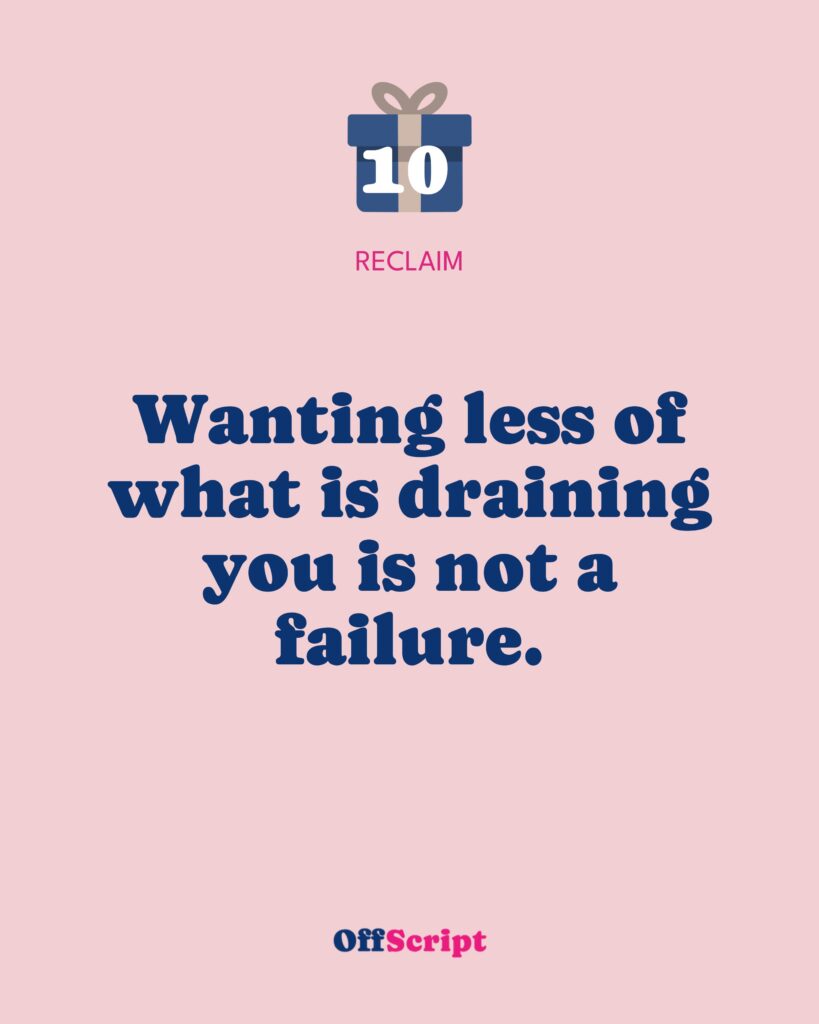
We talk a lot about wanting more.
More clarity. More confidence. More joy. More alignment.
For the women I work with, the real turning point is usually this:
“I want less.”
Less firefighting.
Less being the emotional sponge for the entire team.
Less underpaid responsibility.
Less pretending this workload is sustainable.
Less guilt every time you think about leaving or changing direction.
In charities and NGOs, saying “I want less of this” can feel like betrayal. You got into this work because you care. You’ve built an identity around being someone who steps up.
You know the need is real.
You know the impact matters.
So you keep taking it.
And the system quietly learns that you will.
Wanting less is not weakness. It is clarity.
It is you noticing what your nervous system, your body and your spirit have been trying to tell you for a long time:
This isn’t working. Not like this.
Today, let yourself write a list titled “Things I want less of next year”.
You don’t have to publish it. You don’t have to act on all of it. But the minute you let yourself see it, you stop gaslighting yourself into another year of the same.
Day 11

Where do you feel most like yourself?
Not “most impressive”.
Not “most useful”.
Not “most in control”.
Most you.
It might be:
Writing.
Facilitating.
One-to-one conversations.
Being outdoors.
Cooking.
Making things with your hands.
Being with people who don’t see you as a resource.
Those moments are not separate from your career.
They are clues.
The charity and social impact world is full of women who built their work around what was needed, not around who they are.
Today, pay attention to the moments where you feel like yourself, not a role.
That feeling is part of the blueprint for what comes next.
Day 12
Day 13
There’s a particular kind of exhaustion that shows up when you work in mission-led roles.
Not because you’re bad at your job.
Not because you’re weak, disorganised, or somehow lacking.
It comes from operating inside systems that quietly rely on over-extension.
From absorbing emotion.
Carrying responsibility.
Holding things together so others don’t have to.
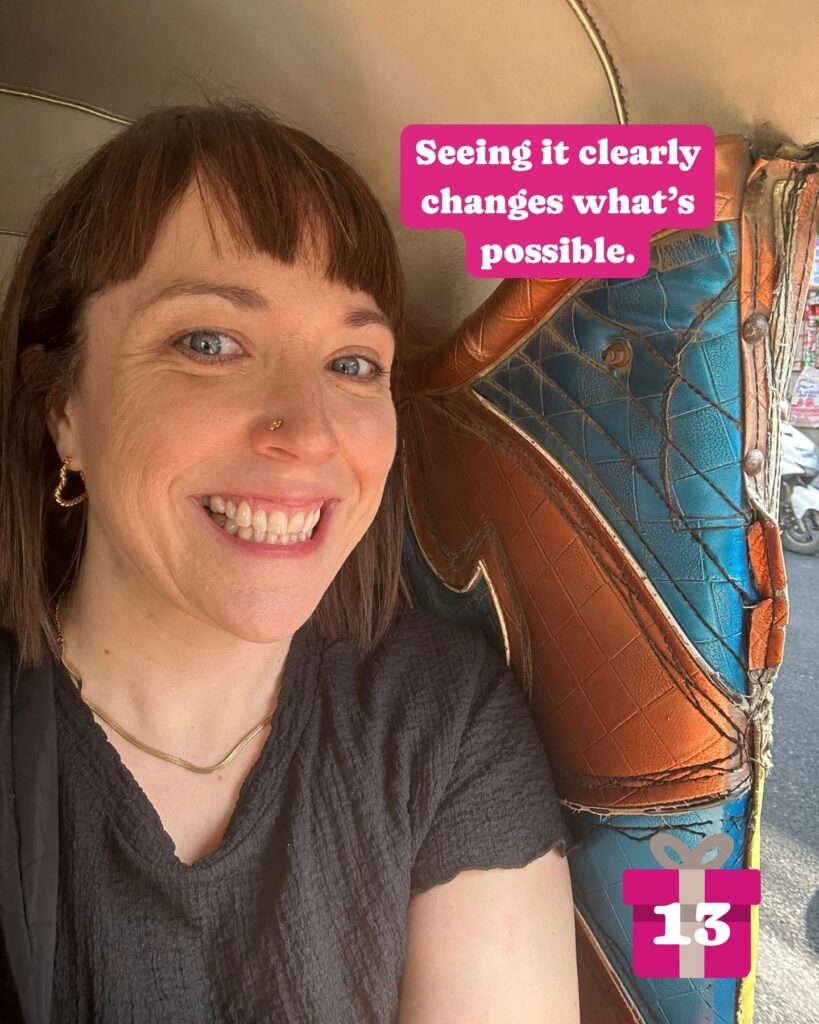
When you start to see that clearly, something important changes.
The tiredness stops feeling like a personal failing.
Your confidence starts to come back.
Your voice gets louder.
Your options widen.
Reclaiming doesn’t begin with fixing yourself.
It begins when you stop blaming yourself for what was never yours to carry alone.
And from there, different choices become possible.
What do you get back when you stop carrying this alone?
Day 14
Reclaiming isn’t always about burning out.
Sometimes it’s about realising:
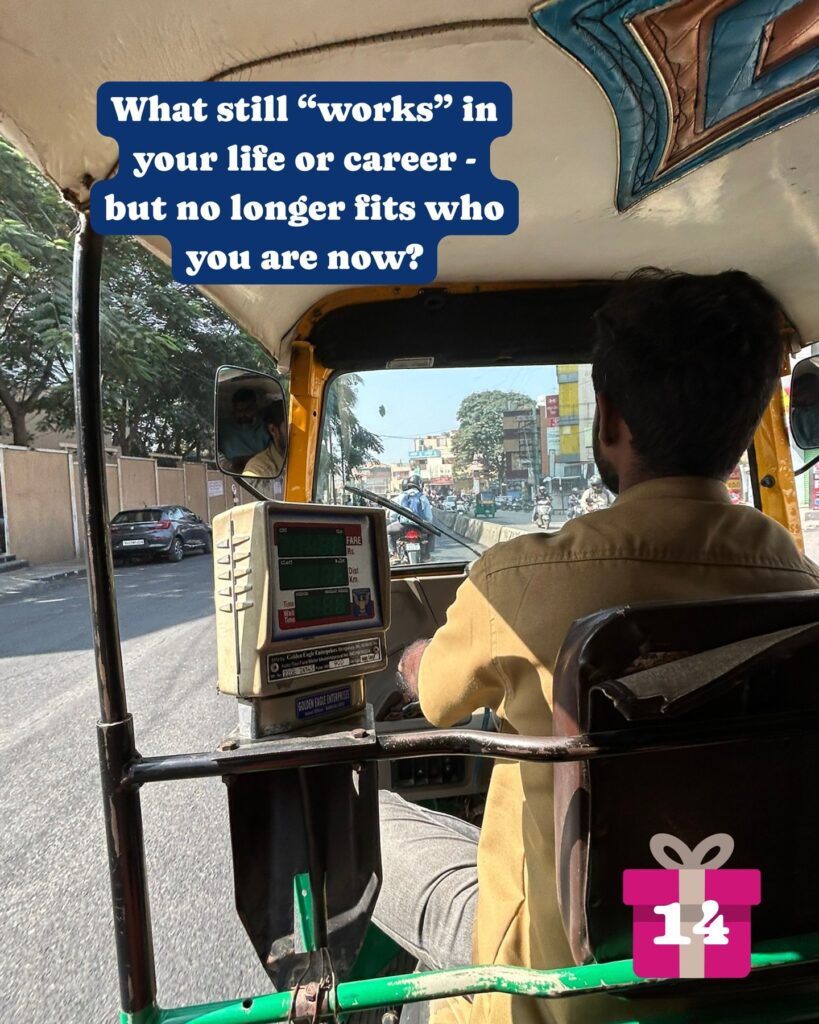
this still “works”
people are happy with my performance
I’m good at this
I’m relied on
…and yet something feels, just, wrong.
No longer true.
Many women stay years past the point of fit because nothing is bad enough to justify change. Or at least they’re so conditioned that they can’t see it.
But growth doesn’t wait for permission.
And misalignment doesn’t announce itself loudly.
Reclaiming, here, is letting yourself name this without judgement.
Not rushing to fix it, or forcing gratitude.
Not gaslighting yourself into staying.
Just telling the truth:
this made sense for who I was. It doesn’t for who I am now.
That’s not a crisis.
That’s evolution.
Join the women rewriting the script
Get OffScript Notes - part honesty, part clarity, part reminder that you’re not stuck.
Join the list to get thoughtful insights, practical reflection tools, and first access to new resources and offers.
SIGN UP

Almost there!
You can embed an email signup form here by pasting the code for one in the blank "embed" box below.
You're all signed up! Keep your eyes on your inbox for your guide.

